

Channel partners can be the fastest way to scale a B2B telecom or IT business – or the slowest, depending on how much support they get. If you just leave partners to figure it out on their own, they'll default to the easy sell. Equip them with real marketing support, and you unlock a revenue channel that rivals your direct sales team.
As of 2025, 75% of global B2B transactions go through channel partners.1 That's not a side channel anymore; that's the primary route to market for most B2B companies.
At Mojenta, we help telecom, IT, and cloud companies build these programs, including a full rebuild for UniVoIP when they shifted their go-to-market from end users to channel partners. Read on to see what a strong channel partner marketing strategy should actually look like, and where most programs fall short.
What Is Channel Partner Marketing?
Channel partner marketing equips resellers, agents, and other partners with the tools and support they need to sell your products effectively.
You don’t market to partners the way you'd market to a direct customer. You market through them, which means your job shifts from generating your own leads to making it easy for someone else to generate leads on your behalf. This change in approach requires different content, different training, and an entirely different relationship dynamic.
Channel Partner Marketing Activities That Do the Heavy Lifting
Your time and budget are finite, and so is your partners' time. Here are a few channel partner marketing activities that justify the investment by moving the needle:
Co-Brandable Content
Co-branded materials let partners become part of your brand story while giving them ready-to-use collateral they'd otherwise have to build from scratch. This can include:
- Case studies
- One-pagers
- Guides
Good co-branded content gets reused across partner websites, email campaigns, and more because it serves both of you.
Partner Training
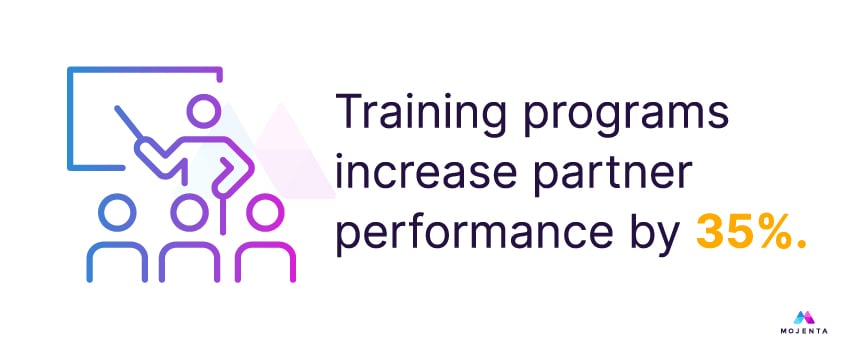
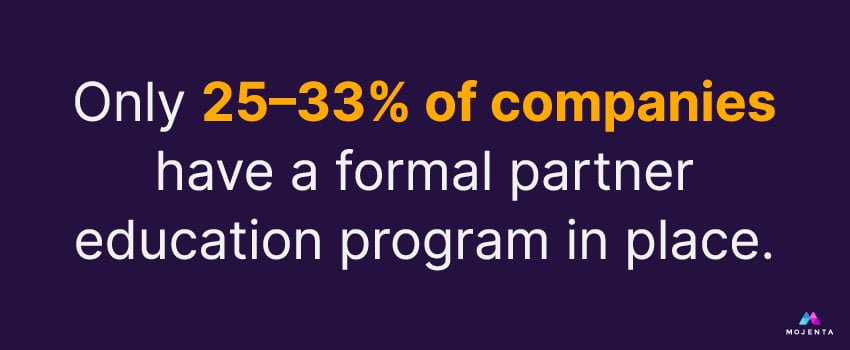
Implementing a training program can increase partner performance by 35%.2 However, only 25 to 33% of companies have a formal partner education program in place.1 Your partners need to understand your:
- Products
- Ideal customer profile
- Messaging
- How to position you against competitors
Without this, they're likely guessing instead of selling with confidence.
Partner Enablement
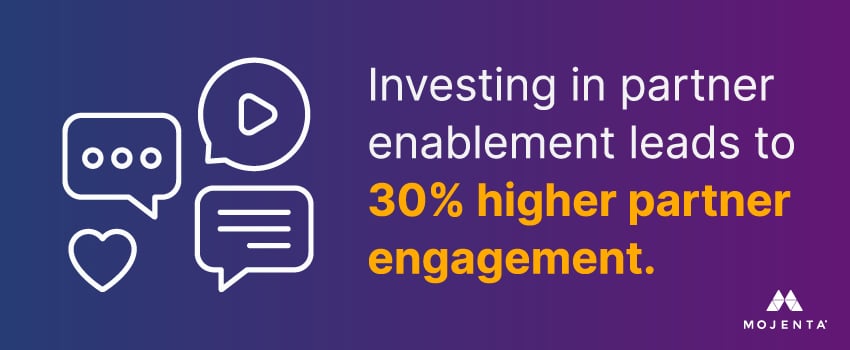
Organizations that invest in partner enablement experience 30% higher partner engagement.3 Enablement is an ongoing practice of keeping partners in the loop about product updates, market shifts, new competitors, and evolving customer needs. Partners who feel supported and informed close bigger deals and stay longer.
MDF Campaigns
Market Development Funds (MDF) let partners tap shared budgets to run local demand generation. Instead of you running a national campaign that misses regional nuances, your partners use MDF to run campaigns that reflect their market and relationships. The result is more authentic, more local, and typically more effective because partners are invested.
Joint Events
Webinars, in-person events, and virtual workshops that pair your expertise with a partner's local relationships help build credibility on both sides. Partners bring the audience and the relationships, while you bring the expertise. Together, you create demand that benefits both of you.
Partnership Marketing Plan vs. Channel Partner Marketing Strategy
A partnership marketing plan usually refers to a single joint initiative, like a co-branded campaign or event with one partner. A channel partner marketing strategy is the system that supports your entire partner network across every tier and touchpoint.
Both matter. Individual partnership marketing plans give you flexibility for high-value relationships, while the overarching strategy keeps your program consistent and scalable.
Channel Partner Marketing Plan Template
A channel partner marketing plan needs to answer three questions before you build a single asset: which partners you're supporting, what success looks like for them, and what resources you're going to provide.
If you're starting from scratch, a basic channel partner marketing plan should cover:
- Partner Tiering: Segment by revenue potential, strategic fit, or market focus so you're allocating resources where they'll have the most impact.
- Shared Goals: Agree on specific, measurable targets with each partner tier, not vague growth expectations.
- Content and Asset List: Document the materials you’ll provide, and be specific about what format they come in and how frequently you'll refresh them.
- MDF Allocation: Decide how much funding is available, what it can be used for, and what approval process your partners need to follow.
- Reporting Cadence: Clarify how often you'll review performance together, and what metrics matter to prevent surprises and keep the conversation solution-focused when challenges come up.
At Mojenta, we follow a similar channel marketing framework for clients, tailoring the tiers and assets to each partner network's size and maturity.
5 Essential Channel Partner Marketing Best Practices
The partner programs that deliver revenue aren't doing anything mysterious. They're just executing consistently on these fundamentals:
1. Consistency Beats Intensity
Steady support beats a single big campaign launch that fades after a month. Partners need to know they can rely on you for regular content, training, and communication.
2. Make It Easy, Not Just Available
Make sure your resource library is clearly organized, labeled, searchable, and easy to download from. If partners have to dig through a cluttered portal to find your marketing materials, they'll create their own versions instead.
3. Track Partner-Sourced Revenue
Without clear tracking, enablement programs can start to feel like a cost center instead of a revenue driver. You need to know which partners generate deals and which campaigns drive those deals – or else there’s no way to know which of your investments are working.
4. Meet Partners Where They Are
Some partners want hands-on campaign support, where you help them set up campaigns and coach them through execution. Others just want good assets and to be left alone. Both approaches work; just make sure to adapt your support accordingly.
5. Connect Your Channel Partner Sales Strategy
Marketing only works if you connect it to a channel partner sales strategy. That means clear deal registration processes so partners aren't afraid of conflict with your sales team, along with a transparent commission structure and a shared definition of what counts as a partner-sourced deal.
Build Your Channel Partner Go-to-Market Strategy With Mojenta
Great partner programs aren’t built on a mountain of materials. They're built on making it so easy for partners to sell that they actually want to. Add a plan that scales as your network grows, and you've got something sustainable that benefits everyone.
At Mojenta, we build these programs for B2B telecom and IT companies, including the full partner-focused rebuild that helped UniVoIP grow signed channel partners by 500%. If you're ready to build a program that supports your partners instead of just supplying them, book a meeting with our team.
Sources: