
Email marketing continues to be one of the most reliable ways for B2B companies to reach the right people and move deals forward. It’s cost-effective, easy to scale, and consistently ranks as one of the top-performing digital channels. In fact, a 2025 report found that B2B businesses using email marketing see a 2.4% lead conversion rate on average.1
But when it comes to driving results, sending a generic message to your entire marketing contacts list and hoping for the best isn’t going to cut it. So, what is the most effective email marketing campaign strategy for your business? Let’s break it down.
TL;DR
- The most effective email marketing campaign strategy combines audience segmentation, behavior-based personalization, and automated, trigger-based flows, so each contact gets a relevant message when it is most likely to be useful. For B2B companies, that means emails built around a contact's role, funnel stage, and what they have actually done.
- Segment by behavior as well as by job title and industry, since actions such as downloads, pricing page visits, and past clicks show how close someone is to buying. Segmented campaigns drive 30% more opens and 50% more clickthroughs than unsegmented ones.
- Automated flows such as welcome series, lead nurture sequences, re-engagement campaigns, and onboarding series send timed messages triggered by real actions, which lets a lean team stay in touch with every lead.
- Personalization goes beyond first names: reference the recipient's industry, suggest content based on past activity, and match the call-to-action to their funnel stage.
- Execution details decide whether emails get read: short subject lines of roughly 40 to 50 characters, mobile-friendly single-column layouts, and one clear CTA per email. A clean, authenticated sending domain keeps those emails out of the spam folder.
- Test subject lines, send times, and content continuously, and judge results by clicks, conversions, and pipeline rather than opens alone, because the strategy that works this quarter will need adjusting next quarter.
Why Does Your Business Need an Email Marketing Strategy?
Without a clear plan, email marketing can feel like a lot of effort with very little payoff. You might be sending campaigns regularly, but if they’re not relevant or timely, they’ll be ignored – or worse, lead to unsubscribes.
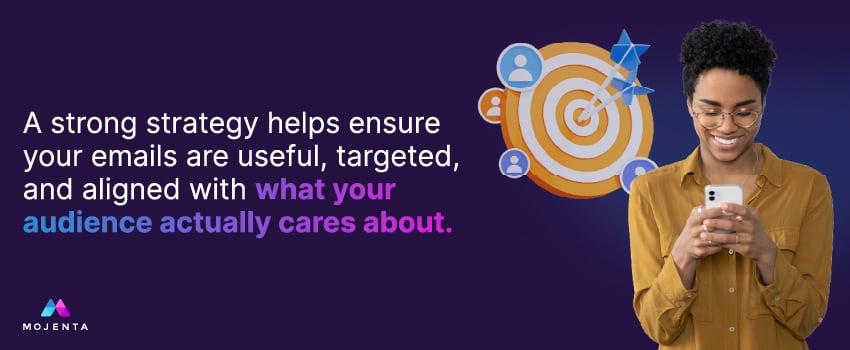
A strong strategy helps you ensure your emails are useful, targeted, and aligned with what your audience actually cares about. It also gives your team a shared framework, so every send supports bigger-picture goals like improving conversion rates, nurturing leads, and expanding upsell opportunities.
7 Email Marketing Best Practices for B2B Campaigns
Consumer brands can rely on flashy promotions to capture attention, but email marketing in the B2B world hinges on providing value. Here are some email marketing best practices to run a successful B2B campaign:
1. Know Your Audience
Before you write anything, take a step back and consider:
- Who you’re writing for
- What they’re dealing with
- What would actually help them
You can get to know your target audience better by creating a buyer persona, which is a semi-fictional profile representing your ideal customer. This should be based on real data from your existing clients, including their job titles, roles in the buying process, pain points, and goals.
The more you understand what drives your audience, the easier it is to craft emails that feel relevant and helpful.
2. Segment for Relevance
Segmentation lets you send the right email to the right people. Rather than sending one message to everyone on your list, you can send targeted campaigns by grouping contacts by job title, industry, behavior, or where they are in your funnel.
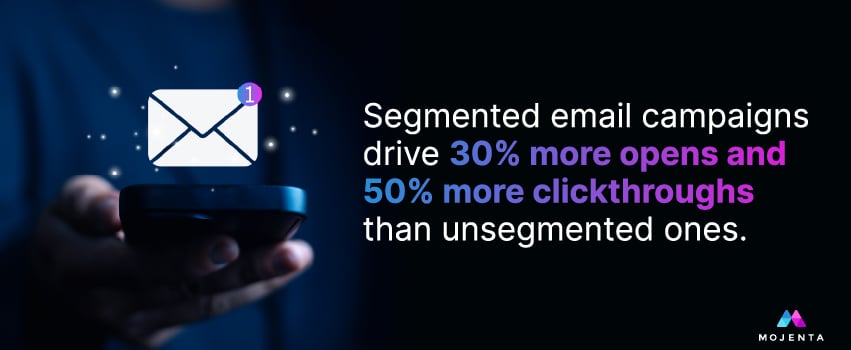
When people receive content that’s tailored to their needs or interests, they’re more likely to open, click, and take action. And that’s not just a theory – HubSpot found that segmented email campaigns drive 30% more opens and 50% more clickthroughs than unsegmented ones.2
Even simple segmentation, like separating leads from current customers, can go a long way in making your emails feel more relevant.
3. Prioritize Deliverability
All the strategy in the world won’t help if your emails get sent straight to the spam folder.
You can improve deliverability by using a reputable email service provider, cleaning up your contact lists regularly, and authenticating your domain with SPF, DKIM, and DMARC. Avoid practices like purchasing lists or adding too many images and links, which may trigger spam filters.
4. Craft Click-Worthy Subject Lines
Your email subject line is your first (and often only) chance to make an impression. Keep it short, clear, and focused on what the reader will get from opening the email.
Rather than using clickbait or misleading language, speak directly to the reader’s priorities. A subject line like “5 tips to strengthen your cloud security” is more likely to perform than something vague or overly promotional. A/B testing subject lines is also a smart way to learn what tone and format your audience prefers.
5. Use Strong CTAs
Every email should guide your readers to take a specific next step with a clear call-to-action (CTA), whether that’s downloading a guide, booking a demo, or reading a blog post.
Too many CTAs can confuse your audience or water down your message, so keep it simple. Make sure your CTA stands out visually, use actionable language (like “Get the guide” or “Schedule your call”), and make it easy for the reader to follow through without extra clicks or steps.
6. Optimize for Mobile
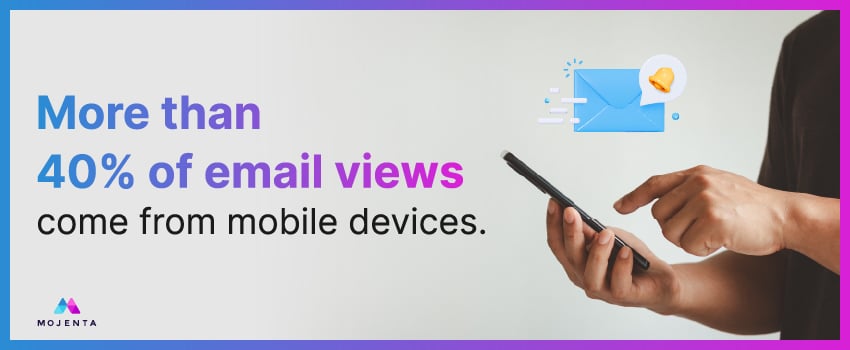
More than 40% of email views come from mobile devices,2 so design with mobile responsiveness in mind. If your emails aren’t easy to read and interact with on a phone, you risk losing your audience before they even get to the CTA.
Some simple ways you can keep mobile in mind include:
- Using a single-column layout
- Keeping paragraphs short
- Choosing a font size that’s readable on smaller screens
- Ensuring images can scale without breaking the layout
As a general rule, always test your emails on mobile before you hit send.
7. Test and Optimize
What worked last month may not work today, which is why testing is so important. Run A/B tests on subject lines, send times, button colors, and even content types regularly to see what readers are engaging with.
Just as important as testing is learning from the results. Take the time to review performance metrics like clickthroughs, conversions, and unsubscribe trends, using open rates as a rough signal rather than a verdict.
Bonus: Our Top Email Marketing Tips for Results
Beyond the best practices, here are some strategic email marketing tips that we’ve found separate great campaigns from good ones:
Build Automated Nurture Sequences
Following up on emails manually can only get you so far, especially if you’re working with a lean team. Automated nurture sequences let you stay connected with leads without having to send individual emails each time someone engages with your brand.
Building automated campaigns around your buyer journey helps keep your brand top-of-mind and builds trust while your team focuses on closing deals.
Personalize Beyond First Names
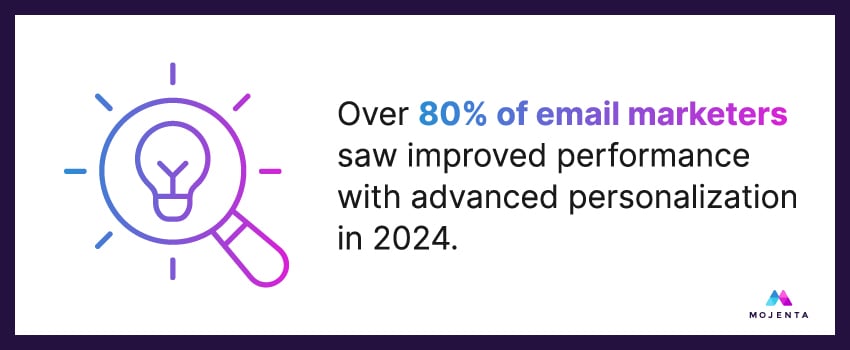
A 2024 survey found that over 80% of email marketers saw improved performance with advanced personalization,3 but that involves more than writing “Hi [Name].”
Show that you understand who your readers are and what they care about by referencing the recipient’s industry, suggesting content based on past activity, or tailoring your CTA to match their funnel stage. You don’t need to go overboard with dynamic fields, but thoughtful touches go a long way.
Repurpose High-Performing Content
You don’t need to start from scratch every time you plan an email marketing campaign. Some of your best-performing blogs, guides, or case studies can easily be turned into high-value email series to save your team time and reinforce the messages your audience has already shown interest in.
For example, a blog on “Top AI Trends for Contact Centers” can be broken into a three-part email series, with each email highlighting one key trend and linking back to the full article. Repurposing also extends the life of your content and helps you get more ROI from assets you’ve already invested in.
Align With Other Channels
Your emails shouldn’t feel disconnected from the rest of your marketing strategy. If your social media team is promoting a new case study or your sales team is sending personal outreach, your email campaigns should support that same message.
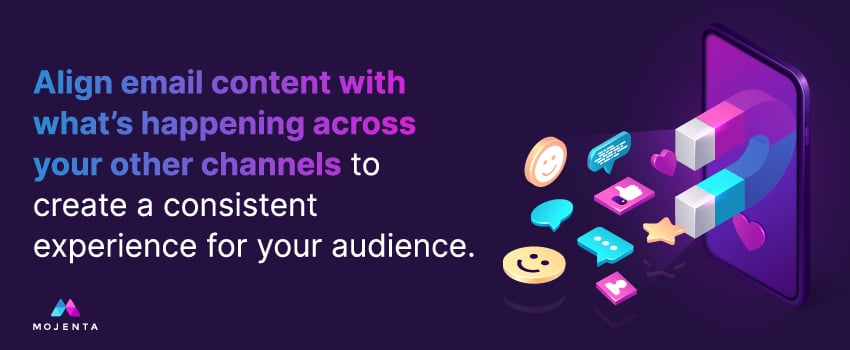
Aligning email content with what’s happening across your other channels can help you create a consistent experience for your audience. Someone might scroll past your LinkedIn post promoting your new service, but open your email about it later. With cohesive messaging, people are more likely to recognize and respond to your brand.
Email Marketing Strategies B2B Teams Should Be Using
There’s no single “best” email campaign for everyone, but here are a few proven types worth building into your strategy:
Lead Nurturing Sequences
Lead nurturing campaigns help guide prospects through your funnel with the right content at the right time. These campaigns are typically triggered after someone downloads a resource, fills out a form, or engages with your website.
Instead of going straight for the sale, lead nurture emails deliver helpful, relevant content like blog posts, case studies, or how-to guides that build trust over time. They keep your brand top-of-mind while educating your audience and nudging them closer to a buying decision.
Promotional Campaigns
Promotional emails can drive big results when used strategically. These are great for announcing limited-time offers, product launches, webinars, or upcoming events, but keep in mind that what makes them effective is relevance. Instead of blasting the same promo to your entire list, tailor the message to the audience segment most likely to care.
Re-Engagement Campaigns
Even the best email lists have contacts who stop opening or clicking. Re-engagement campaigns give you a way to bring those quiet leads or customers back into the conversation.
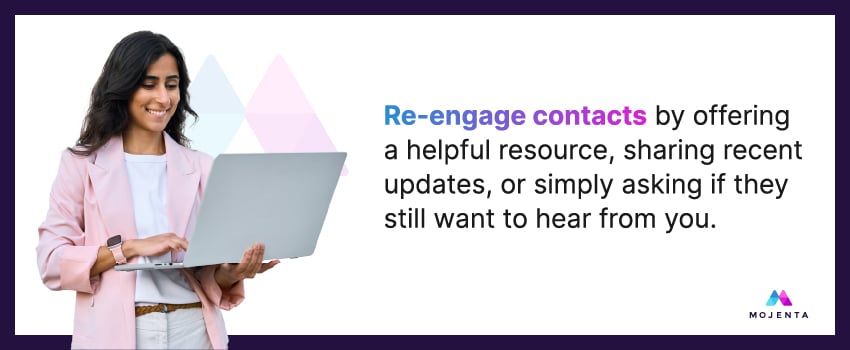
You can offer a helpful resource, share recent updates, or simply ask if they still want to hear from you. Sometimes, a personalized note or small incentive is enough to reignite interest and reestablish a connection.
Client Onboarding Series
Once a prospect becomes a customer, your emails should shift to helping them get the most value from your product or service. Your client onboarding sequence could include setup instructions, quick tips, or a check-in from a real team member. The goal is to build confidence early and make sure new customers feel supported, not left to figure things out on their own.
Putting Behavioral Email Marketing Into Practice
Segmentation, personalization, and automation are easy to agree on and harder to run. This section covers the operating detail that turns them into a working program: which signals to segment on, which flow to build first, how to keep automated emails from colliding, and how to judge results.
Segment on Buying Signals, Not Just Firmographics
Job title and industry tell you who a contact is. Behavior tells you how close they are to buying. Useful B2B signals include repeat visits to pricing or integration pages, webinar attendance, and case study downloads, and for existing customers, product usage or a lapsed login. Most email platforms and CRMs can turn these into lead scores or dynamic lists that update automatically. A firmographic segment stays the same for months while a behavioral one changes daily, which is why behavioral segments usually convert better and also need more maintenance.
Build a Welcome Series First
A welcome series reaches people at the moment they chose to hear from you, which makes it one of the highest-engagement flows most companies run. In B2B, that moment is usually a newsletter signup or a gated download. Three to four emails over about two weeks is a common shape: deliver what was promised, introduce the problem you solve, share proof such as a case study, then offer one clear next step. Teams that skip the welcome series and drop new contacts straight into the monthly newsletter waste their most attentive window.
Set Entry, Exit, and Suppression Rules
Every automated flow needs rules for who enters, what removes them, and which other emails they should not receive at the same time. A prospect who books a demo should leave the nurture sequence immediately, and a new customer should move from nurture to onboarding instead of receiving both. Without these rules, contacts end up in three flows at once and get a sales-stage email the day after signing a contract. Mapping every flow on one page, with its trigger and exit condition, is the simplest way to catch collisions before contacts do.
Retire Unengaged Contacts With a Sunset Policy
A sunset policy removes contacts who have stopped engaging, which protects sender reputation for everyone else on the list. A common approach is to flag anyone with no clicks in 90 to 180 days, send them a short re-engagement sequence, and suppress those who still do not respond. This matters more since Google and Yahoo began enforcing bulk sender rules in 2024, including domain authentication, one-click unsubscribe, and spam complaint rates below 0.3%. Keeping uninterested contacts makes the list look bigger and every result look worse.
Judge Campaigns by Clicks and Pipeline, Not Opens
Open rates are no longer reliable on their own. Apple Mail Privacy Protection, introduced in 2021, preloads email content and registers opens whether or not a person read the message, which inflates open rates across much of a typical list and skews subject line tests judged on opens. Clicks, replies, form fills, and meetings booked are harder to distort. For B2B, the most useful view connects email activity to the CRM, so you can see which flows contributed to opportunities and closed deals. A campaign with average opens and strong pipeline is worth more than the reverse.
What Sets the Best Email Marketing Campaigns Apart?
The best email marketing campaigns – the ones that consistently drive engagement and revenue – tend to have a few things in common:
- They’re targeted. Every message is written with a specific audience in mind.
- They’re useful. The content helps the reader solve a problem or learn something new.
- They’re based on data. The strategy is shaped by how people are actually engaging, not assumptions.
- They’re strategically timed. The emails show up when they’re most likely to be helpful or relevant.
They also include a plan for testing and improving over time. You won’t get everything right on the first try, and that’s okay. Look at the numbers, adjust based on what you learn, and keep getting better.
Build a Better Email Marketing Plan With Mojenta
Email marketing should feel like an extension of your brand, not a last-minute task on your to-do list. When done right, it helps your audience feel supported, builds real relationships, and makes it easier for your sales team to do their job.
Looking to take your email marketing to the next level? At Mojenta, we build email strategies that drive real growth for B2B tech brands. Whether you’re starting from scratch or optimizing what you have, we’ll help you strengthen your funnel and maximize ROI.
Book a consult with us today to learn more about how we can amp up your email performance.
Email Marketing Campaign Strategy FAQs
How often should a B2B company send marketing emails?
For most B2B companies, two to four marketing emails per month per contact is a sensible starting point, with triggered emails sent on top when someone takes an action. The right number depends on how much useful content you have and how fast your buyers move, so increase frequency gradually and watch unsubscribe and spam complaint rates as you go. Set a cap on total emails per contact per week across all campaigns and flows. Most frequency problems come from several teams sending at once, not from any single campaign being too frequent.
How long should a B2B marketing email be?
Most B2B marketing emails work best when they can be read on a phone in under a minute, which usually means under 200 words. Nurture and promotional emails should make one point and link to the full content, while newsletters can run longer because readers scan them for the item that interests them. Plain-text-style emails from a named person often outperform designed templates for sales-adjacent messages such as demo follow-ups. If an email needs three sections to make its case, it is usually two emails.
What is the difference between a nurture sequence and a drip campaign?
A drip campaign sends a fixed series of emails on a set schedule, while a nurture sequence adapts to what each contact does. In a drip, everyone gets email two on day three regardless of whether they clicked email one. In a nurture sequence, a contact who visits the pricing page might skip ahead to a case study or be routed to sales, while one who ignores the first emails gets a different angle. Many programs labeled as nurture are really drips, which is why they plateau after the first few sends.
Can a small B2B team run automated email campaigns?
Yes, and small teams often benefit the most because automation replaces follow-up work nobody has time to do manually. Start with two flows: a welcome series for new subscribers and a short sequence triggered by your main gated download. Most mainstream email platforms include the automation and segmentation features needed for both. Two flows that run well and get reviewed monthly will outperform ten flows that were built once and never checked again.
How do you email several stakeholders at the same company?
Segment each contact by role and send content that matches their part of the decision, rather than sending the same email to everyone at the account. A finance lead cares about cost and payback, a technical evaluator about integration and security, and an end user about day-to-day workflow. Coordinate at the account level so the combined volume stays reasonable, and give each stakeholder material they can forward internally. Identical emails landing in five inboxes at the same company tend to get flagged as spam by the recipients themselves.
How long does it take to see results from an email marketing strategy?
Engagement changes from better segmentation, subject lines, and list hygiene usually show within a few weeks, while pipeline impact takes about as long as your sales cycle. For many B2B companies, that means three to six months before a new nurture program can be judged on opportunities and revenue. Track leading indicators in the meantime, such as click rates by segment, flow completion, and meetings booked from email. Changing a flow before it has reached enough contacts to produce a clear result is one of the most common ways teams undo their own progress.
Sources: