
Most B2B tech companies don't decide to outsource digital marketing because things are going well. It usually happens after another quarter where the blog went quiet, the paid campaigns ran on autopilot, and the one marketer on staff spent half the week fixing the website instead of building pipeline.
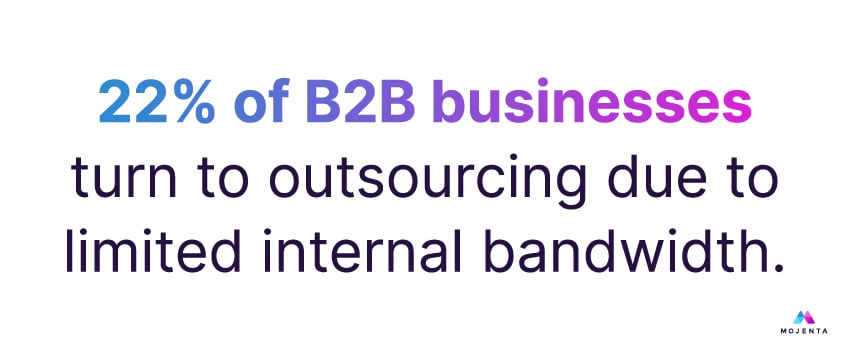
Limited internal bandwidth is why 22% of B2B businesses turn to outsourcing,1 and that number keeps climbing as the gap between what marketing needs to do and what in-house teams can actually handle keeps widening.
Outsourcing can fix that, but only if you go in with a plan. At Mojenta, we’ve run outsourced marketing for 400+ telecom, IT, and cloud companies since 2010, and we've learned what separates successful engagements from ones that stall. Read on to find out what those differences are and how to set yourself up for success.
Why Outsource Your Digital Marketing?
Most companies choose to outsource because building a full in-house team is slow and expensive. Covering strategy, content, design, SEO, paid media, email, and marketing ops takes about a half dozen specialists, and since very few growing companies can hire all of them, they hire one or two generalists and hope it works out.
Here are a few signs it's time to bring in outside help:
- Campaigns launch late, or not at all, because nobody has time to execute.
- Your team knows what to do but doesn't have the hours to do it.
- Results have flattened, and nobody can say exactly why.
- You're paying for HubSpot and using a fraction of it.
- Leadership is writing the marketing between sales calls.
If you only need one person doing a channel full-time, an inside hire can make sense. But if you need four or five skill sets working together, outsourcing almost always gets you there faster and for less.
Top 4 Benefits of Outsourcing Digital Marketing
The most obvious benefit of outsourcing is that you get room to breathe. You can run campaigns that have been on the backlog for months, and execute the strategy you've been planning but never had time to build. The less obvious benefits matter more over time:
1. Add Specialists Without Hiring
When you outsource, you get a strategist, writer, designer, SEO lead, and paid media manager – all for less than the cost of building that team in-house. Plus, you skip the time and resources that go into months of recruiting, onboarding, and ramp-up.
More importantly, you get people who specialize in their craft. A generalist can learn SEO, but an SEO specialist knows the changes Google made last month and has already adapted their approach. That difference shows up in your results immediately.
2. Gain Spend That Flexes
Outsourcing lets you match your spending to your actual needs, quarter by quarter. You can scale up for a trade show or product launch, then scale back when things are steady.
In-house salaries don't work that way. You hire for peak capacity and pay for it all year, or you underhire and miss opportunities.
3. Adopt New Channels Faster
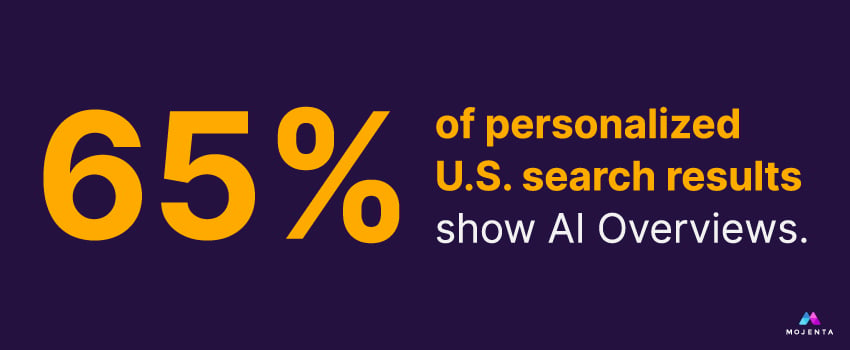
AI search is the current example. Buyers are already asking ChatGPT and Perplexity which vendor to call, and 65% of personalized U.S. search results show AI Overviews.2 But most in-house teams still haven't had time to learn answer engine optimization.
An agency working across dozens of companies in your space has already learned the channel and is running it for other clients. You get the benefit of that learning immediately, not six months from now.
4. Get an Outside Perspective
A digital marketing agency working across your industry sees what's getting results right now, not just what worked for you last time.
As a marketing agency working exclusively with B2B telecom, IT, and cloud providers, Mojenta knows which messaging angles are landing with your buyers, which channels are overused and crowded, and which ones still have room to grow. That perspective can help unlock growth faster than another round of internal brainstorming.
What To Hand Off and What To Keep In-House
You don't have to outsource digital marketing all at once, and you shouldn't hand off everything. Here's the split we see work most often:
Outsource:
- Content production, including blogs, case studies, and email
- SEO, AEO, and website updates
- Paid search and social management
- HubSpot setup, workflows, and reporting
Keep In-House:
- Product knowledge
- Customer insight
- Final say on messaging
- Sales alignment and lead follow-up
- Budget ownership
Not sure an agency is the way to go? Mojenta’s Are We a Fit? page lays out who we work best with, and our pricing page shows how we structure engagements to help you see if we align.
How to Outsource Digital Marketing Services
Before you talk to a single agency, work through these steps:
Put Your Goal in Numbers
"More leads" isn't a goal. "Forty sales-qualified leads a quarter from organic and paid" is. A good partner will plan backward from it.
Audit What You Already Have
You probably have more content than you realize, and some of it probably still drives traffic and leads. List your channels, tools, content pieces, and current results so that you’re not paying someone to rebuild what's already working.
Pick an Outsourcing Model
Freelancers fit one-off tasks like a website refresh or a white paper, and specialist shops are good if you need to scale one channel deeply, like SEO or paid search. However, a full-service agency makes the most sense if you need strategy and execution working together across multiple channels, as the channels work better when they're coordinated.
Look for Industry Experience
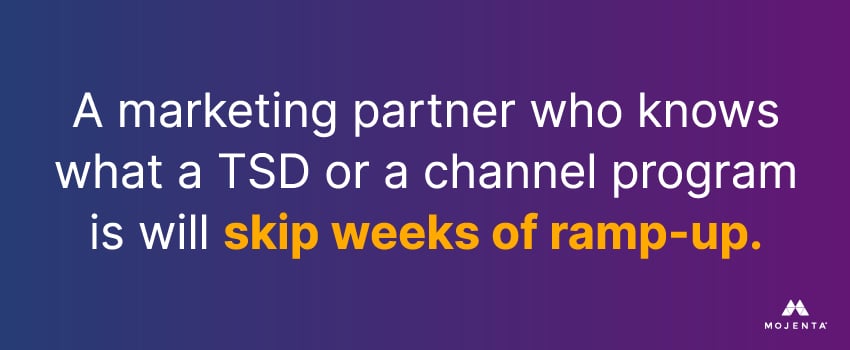
A partner who already knows what a TSD or a channel program is will skip weeks of ramp-up. Ask for results from companies like yours, like our CoreDial website relaunch that drove a 528% increase in closed/won deals.
Start With a Defined First Project
A website refresh, a content engine, or a HubSpot cleanup gives both sides a clear win before the scope grows. You get to see how the agency works, while they get to understand your business and your team. It's the best way to start.
Keep Visibility and Control
The biggest worry we hear about outsourcing is losing visibility once the work leaves the building. That's why when we manage HubSpot for clients at Mojenta, the portal stays in their name. Your data stays yours, your history stays with you, and you never lose sight of what's happening in your pipeline or your campaigns.
How to Outsource Digital Marketing Effectively
Most outsourcing relationships that fail don't fail on talent, but on expectations. Paid search and email can show results within weeks, but SEO and content usually need three to six months to build momentum. Plan for that before anyone signs anything.
A realistic first 90 days of an engagement will look something like this:
- Month One: Onboarding, access, audits, and a strategy you both sign off on
- Month Two: First campaigns and content go live, and tracking gets verified
- Month Three: The first real performance read, followed by adjustments
After that, meet monthly to review results against the goals you set at the beginning, and quarterly to decide what to scale. If a channel isn't pulling its weight, move the budget somewhere that is. The right agency will recommend moving spend away from their own work if the data shows it's not working.
Outsource Digital Marketing With an Agency That Speaks Your Language
Outsourcing pays off fastest when your partner understands your buyers well enough to produce on day one. Across the B2B space, external partners now handle about 34% of digital marketing activity.3 That’s because more companies are realizing that specialists outperform generalists, and that speed matters in competitive tech markets.
At Mojenta, we stay focused on B2B telecom, IT, and cloud, so our clients get senior strategy and full execution – from SEO to HubSpot to paid campaigns – without building the team themselves. TailWind's website and marketing program, for example, have generated more than $13 million in closed/won deals.
Want to see what that could look like for your company? Get started with Mojenta today.
Sources: