

Most SaaS companies market like they're selling one-time software licenses. They optimize for the initial conversion, celebrate the first deal, and move on to the next prospect. However, that's not what success in a subscription-based model looks like.
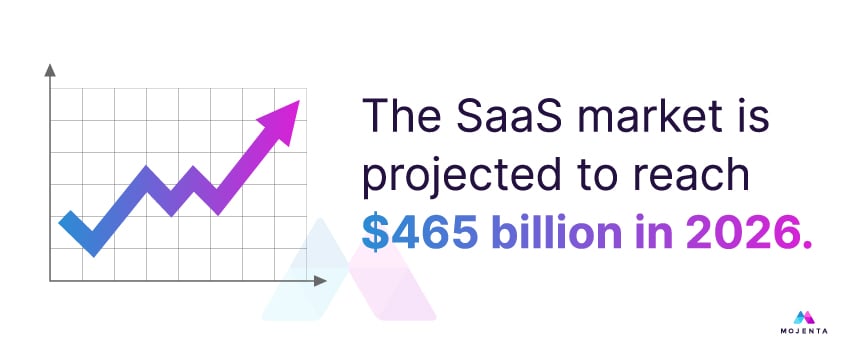
SaaS products lose around 70% of users within the first three months.1 When this happens alongside flat expansion revenue and rising churn, you're caught in a cycle where you have to constantly acquire new customers just to maintain revenue. But with the SaaS market projected to reach $465 billion this year,2 the competition for attention is fiercer than ever.
That’s why more providers are building SaaS marketing strategies that focus on retention with the same rigor they apply to acquisition. Read on to explore strategies for building and optimizing a SaaS marketing funnel for long-term growth.
What Is SaaS Marketing in 2026?
SaaS marketing refers to the tactics, channels, and strategies used to promote software-as-a-service products. This may sound like any other marketing strategy on the surface, but SaaS businesses operate fundamentally differently from traditional software providers.
Software providers win a license sale once. SaaS providers have to win a customer relationship over time. Your revenue model is built on keeping customers, upselling them, and maximizing their lifetime value, which means your marketing strategy can't stop once a prospect converts.
How To Craft an Effective SaaS Marketing Funnel
Building a marketing funnel that really works requires clarity on what each stage means, which channels drive the best results, and where your funnel is leaking value.
Understand the Funnel Stages
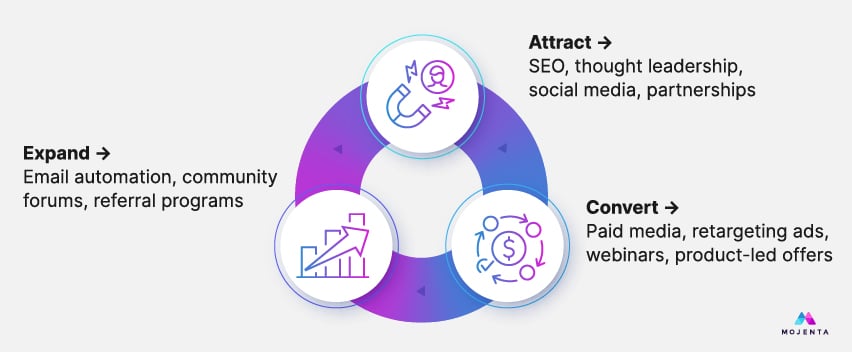
Your SaaS funnel should include three phases:
- Attract: First, you need to get your ideal customers to notice you exist through channels like content marketing, SEO, paid advertising, partnerships, and referral programs. The goal at this stage is to build awareness among the right people.
- Convert: Next, you need to turn those visitors into trials or paying customers. This is where nurturing workflows, product demos, case studies, and webinars come in. You're removing friction between curiosity and commitment.
- Expand: Here's where SaaS marketing diverges most from traditional B2B. After converting, you’ll want to nurture your existing customers so that they’ll use your product more or upgrade to higher-tier plans.
Align Your Channels
Each funnel stage should focus on a different set of SaaS marketing channels and tactics.
During the attract phase, use channels that build authority and drive discovery. SEO, thought leadership content, social media, and partnerships work well here. You're playing a long game at the top of the funnel.
During the convert phase, shift to channels that capture high-intent prospects and nurture them toward a decision. For example, you can capture people actively looking for solutions with paid digital ads, then offer webinars and product demos to let prospects experience your solution directly.
During the expand phase, you need channels that keep customers engaged. Tools like email automation let you send targeted messages to segments based on their activity and behavior, so you can continue working on upsell opportunities. Meanwhile, community forums create engagement and turn happy customers into advocates.
At Mojenta, we help B2B SaaS companies win by treating the funnel like a loop: retention feeds acquisition and vice versa. This circular motion is what sustainable SaaS growth looks like.
Audit for Leaks
Even the best SaaS funnels can leak value. We see the same challenges pop up across providers:
- Strong top‑of‑funnel traffic but weak conversion rates, which can mean poor lead qualification or misaligned messaging.
- Trials that don’t turn into paying users, likely because they don't understand how your product works or why they need it.
- Paying users who churn quickly, typically due to a lack of ongoing engagement to keep them invested.
- Over‑reliance on one channel or tactic, resulting in a fragile pipeline.
Fixing these leaks requires systematic auditing. Track your conversion rates at each stage, measure which channels deliver the highest-quality leads, then solve the problems you uncover one by one.
Best Practices for a Winning SaaS Marketing Strategy
Get more out of your funnel with these SaaS marketing best practices:
Build a Roadmap
A winning SaaS marketing strategy begins with clarity on your goals, audience, and measurement frameworks. Here’s a high‑level roadmap:
- Define Your ICP: Define who your ideal customer is, what industry they work in, the pain points they experience, etc. The more specific you are, the better your targeting and messaging will become.
- Write Your Value Proposition: How is your SaaS product different from everything else on the market? Write a clear, specific statement of the outcome your product provides.
- Map the Customer Journey: Which touchpoints exist from first awareness to renewal? Breaking down this journey can help you share the right message at the right time.
- Choose the Right Channels: Use marketing channels based on your audience, budget, and funnel stage. You don't need to be everywhere – just everywhere your customers are.
- Measure What Matters: Track metrics like customer acquisition cost, lifetime value, trial-to-paid conversion rate, and churn to see what's working and what's not.
Prioritize Inbound Marketing
Outbound strategies still have a place in marketing, but many high‑growth companies are leaning into inbound. The top marketing channels driving ROI for B2B brands in 2024 were their website, blog, and SEO.3 These channels are key in an inbound SaaS marketing strategy, as they let you build trust faster and find higher-quality leads.
Focus on Customer Retention
For SaaS providers, your best marketing often happens after the initial sale. Onboarding, usage prompts, feature updates, and community all become marketing tactics to keep your users engaged and renewing their subscriptions.
Integrate Paid & Organic Strategically
Experts say marketers should treat SEO as a conversion funnel in 2026 – not just as an awareness builder.4 Ranking organically for keywords like "best CRM for B2B SaaS" creates a steady stream of inbound traffic from people searching for solutions.
Meanwhile, paid marketing helps accelerate results. When done right, you could run paid digital ads today and see clicks tonight. Layering paid ads on top of organic SEO efforts lets you amplify specific offers or reach prospects who haven't yet discovered your product.
Measuring the Success of Your SaaS Marketing Funnel
HubSpot’s 2025 State of Marketing Report found that 35% of marketers said using data to inform marketing efforts is more important now than ever before.5 Make sure to track these metrics in your SaaS inbound marketing strategy:
- Customer Acquisition Cost (CAC): How much are you spending to acquire each customer? This number informs your pricing strategy, customer success investment, and channel allocation.
- Customer Lifetime Value (CLTV): How much revenue does an average customer generate over their relationship with your brand? Compare CLTV with CAC to see whether your business model is sustainable. A 3:1 LTV-to-CAC ratio is generally healthy for SaaS.
- Churn/Retention Rate: What percentage of customers renew versus cancel? The average annual churn rate for SaaS providers in 2025 was 3.5%6 – if yours is significantly higher, it’s time to make changes.
- Trial‑to‑Paid Conversion Rate: What percentage of people who start a trial become paying customers? This metric reveals whether your product resonates with your target audience.
- Expansion Revenue: What percentage of your revenue comes from upsells to existing customers? Strong expansion revenue means your retention efforts are working.
- Activation Milestones: What percentage of trial users hit key milestones in your product? This leading indicator predicts conversion better than raw trial signups.
Once you know these metrics, you can start improving them. Tired of guessing? At Mojenta, we help SaaS companies build dashboards and automations for more predictable, measurable marketing.
Top 6 Channels for SaaS Marketing in 2026
These are the channels we see showing up in the best SaaS marketing campaigns:
1. SEO & Content Marketing
Content still drives discovery, but the days of publishing blogs purely for traffic are gone.
Focus on writing content for keywords that reflect actual buying intent. Searches for "how to choose project management software for remote teams" reveal more intent than "what is project management." Create content that guides your readers toward a trial or demo, not just site traffic.
You should also invest in assets that showcase your expertise and build trust, such as guides, case studies, and comparison pages. These are the resources prospects actually use during their evaluation process.
2. Email Marketing
Email automation and AI are now must-haves for inbound marketing. HubSpot found that using GPT-4 to understand user intent and build hyper-personalized email campaigns led to 82% higher conversion rates.3 Digital SaaS marketing in 2026 will have to make room for the latest tools in order to segment and personalize according to each stage of the funnel.
3. Paid Search & Paid Social
Paid search can help you capture high-intent buyers actively searching for solutions, while paid social – particularly LinkedIn – makes it easier to reach specific industries with awareness and nurturing content.
4. Video, Interactive, & Community Engagement
Create engagement with newer marketing channels like short-form video and interactive demos, which let prospects see your product in action and explore its benefits. Community forums are also important here, as buyers trust peer recommendations. Seeing real customers solve real problems builds credibility in ways traditional marketing can't match.
5. Referral & Partner Programs
Referral incentives encourage satisfied customers to recommend your product to their peers, and partner ecosystems extend your reach into adjacent markets.
These programs work because they leverage trust. A referral from a peer carries more weight than your marketing efforts, and a partner recommendation comes with credibility from an established professional relationship.
6. Product‑Led Growth
Product-led offerings completely flip the traditional sales funnel. Instead of convincing someone to buy your product, you let them experience it first with free demos and trial options. They're more likely to convert once they've already seen what your app can do for them.
Next Steps: Launch Your 2026 SaaS Marketing Playbook With Mojenta
Still not sure where to start or which channels to invest in? Mojenta can help. We work with B2B tech firms to build a strategy that matches your business goals, create inbound marketing funnels that convert trials into long-term customers, and measure the numbers that actually matter for growth.
Set up a discovery call today to get started.
Sources:
- https://www.pendo.io/pendo-blog/user-retention-rate-benchmarks
- https://www.hostinger.com/tutorials/saas-statistics
- https://www.hubspot.com/marketing-statistics
- https://www.digitalsilk.com/digital-trends/b2b-saas-marketing-strategies
- https://www.hubspot.com/state-of-marketing
- https://www.recurly.com/research/churn-rate-benchmarks


/mojenta-feat-CRMforMSPs.jpg)